Wednesday, December 19, 2012

Heavenly Christmas Film Classics

Festival Films is offering a perfect opportunity to make the perfect Christmas present for film lovers dear to you.
"Heavenly Christmas Film Classics" contains rare and even never before seen shorts or TV episodes.

Animation fans are in for a treat! If you don't know Lotte Reiniger, this is a perfect introduction to her work. She is a pioneer in animation and if you think Walt Disney's Snow White is the first animated feature, well you're wrong. It is the first in color, but Lotte Reiniger had directed (with the help of her husband Carl Koch) The Adventures of Prince Achmed, a 1926 feature film entirely animated with articulated paper silhouettes.
The same technique is employed here in The Star Of Bethlehem although the film is narrated by Barbara Ruick and it is Reiniger's second short in color.

Christmas is Magic is a truly moving story about a John Doe with amnesia (played by Hank Patterson who carried his character Fred Ziffel through 3 different series: Petticoat Junction, The Beverly Hillbillies and Green Acres) who meets a young war-widow and her kid. He's all alone in the world, with not even a home town to go back to and she's engaged to a grumpy guy who dislikes Christmas.You guessed it : their lives are about to get better.

The little jewel of this DVD is a short produced, directed and played by James Mason in 1954, at the height of his success, when A Star Is Born had just been released (he actually used the same cinematographer for this Xmas short: Sam Leavitt). It seems Mason had directed two shorts that year, both starring his little daughter Portland. And this one, entitled (like Lotte Reiniger's short) The Star Of Bethlehem is such an obscure title that it did not even have an entry on the imdb (it should have one soon though).
You know that Little Joseph, don't you?
There are basically two parts to this film: first James Mason reads aloud from what I suppose is the Bible. Then he kisses his kids good night and his daughter dreams that she is the Virgin Mary and the story is told with a cast of children in the way of a school play. The sets are designed by Serge Krizman, who worked on the Batman TV series which should give you a good idea of the scenery.
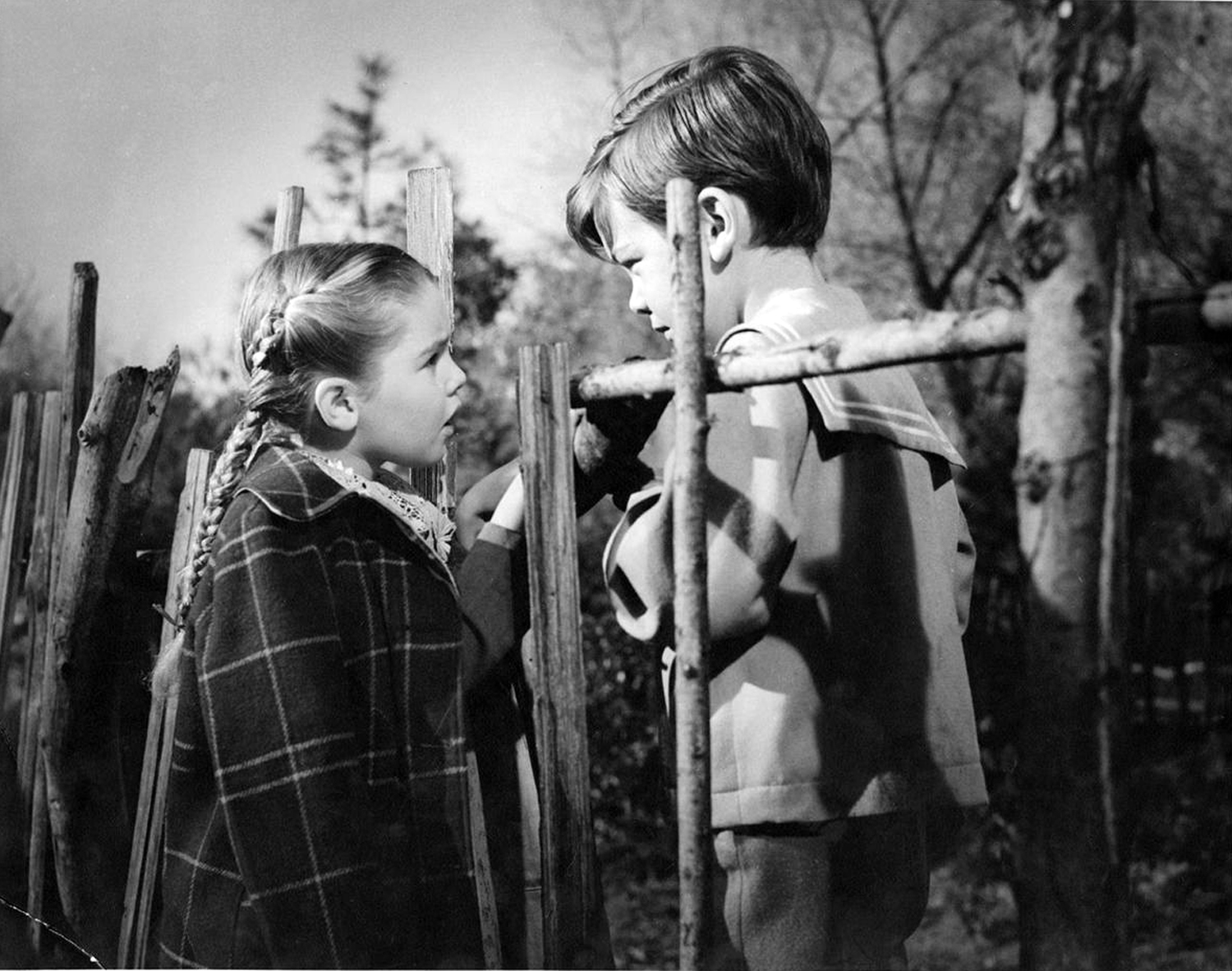
And of course, Joseph is played by little Jerry Mathers who went on to star in Alfred Hitchcock's The Trouble With Harry and in the famous TV series Leave it to Beaver.

Another story with kids taught me a thing or two about Christmas in Latin America. Three Young Kings starts with Scarlett O'Hara's father Thomas Mitchell. Did you know that in Latin countries, the Epiphany is when kids get their presents? And these presents are brought, not by Santa Claus, but by the Three Kings.
This is the story of three pupils chosen to portray the Three Kings in their school to bring all their classmates presents. On their way to do that, they come across many kids from less fortunate families and decide to do the right thing. How are they going to explain that to the school's parents?

Finally, two versions of the story of the song Silent night bookend the program: a 1939 British short and a 1953 color version. All of these are available on the Festival Films website and on amazon.com.

Don't forget to like the Facebook page to receive updates!
I wish you a very merry Christmas!

Thursday, December 6, 2012

Dracula

Universal is celebrating its 100th anniversary and one of the studio's trademark has recently seen a Blu-ray box set release.
Universal monsters movies have defined the codes of the genre, not to mention the features of Halloween masks for centuries to come.
And the first Universal talking picture stars the most famous of them all. In 1931, the first official screen adaptation of Bram Stoker's Dracula hit the screen. It had been preceded by Murnau's famous Nosferatu which, although a masterpiece, was not granted permission to use the story by Bram Stoker's widow. She subsequently tried to have the negatives and all copies destroyed.


Universal's movie was adapted from Hamilton Dean's successful stage play. The studio had wanted to pair the two "masters" of horror: star Lon Chaney, who had triumphed in The Phantom of the Opera, and MGM director Tod Browning. They managed to lure Tod Browning in the Universal family, but Lon Chaney died of lung cancer. After several casting considerations like Conrad Veidt, it was finally decided to go with the easy choice and use the star of the play, Hungarian actor Bela Lugosi.

The latter gave such a memorable performance that he was typecast in the horror genre for the rest of his career.

The silent version

A rather unknown alternate version of the film is simply the silent version. Indeed, at the time, many theaters weren't equipped with sound and so the film was also edited silent, with the usual title cards for dialog.

The Spanish version

In the early 1930s, sound being the new wonder that it was, the technique of dubbing was in its infancy and it was decided that the best way to export a film abroad was to re-shoot it whatever language that was needed. Such was the case with Dracula. When the English crew finished their day's work, a Spanish-speaking crew would come in those same sets and shoot their version of the film at night.

The viewing of this version starring Carlos Villarías is rather unsettling. It is a different movie, yet the scenes are almost sequenced identically. The sets are often photographed in very different ways, showing off more production values that Browning's version. But the Spanish cast gives an impression of camp which is not readily apparent in the English version where the actors seem to take things more seriously. In any case, the scenes drag in the Spanish version and the film lasts about 30 more minutes.
"Nunca bebo... vino"


That version was missing a whole reel for several decades, and the missing scenes (everything from Renfield fainting in Dracula's castle to the opera scene in London) were located in Cuba. There is a very noticeable drop in quality in the restored print throughout these sequences.

The French version


The French version currently on the disc was very recently re-recorded, but the film was indeed released in France in a French version. Unlike the Spanish version, this is not an alternative version shot with other actors but a dubbing. Since the film did not have any background music at all, it was probably easy enough to remake the entire soundtrack in the studio, including effects. The result is strongly criticized: "The dubbing correctly synchronizes the words to the lips, but what conventional intonations! The strangeness of the dialog is not always voluntary! (...) When seeing Dracula, we wonder if its actors should not be silent or, in the version projected in France, do without translation. "

Restoration


For the Blu-ray release, the film has been lovingly and intensively restored. I must say it was easier to appreciate that way, because not only did it erase a good deal of the ravages of time, but it actually corrected several problems that were probably there on first release.

For one thing, the ground noise (hiss) was among the worst I could remember. It was not eliminated but is significantly reduced on the Blu-ray. And the main title was plagued by a jump cut and a drop in the audio, which were both erased.

Through time, some elements of the film were changed. Censorship imposed Dracula's screams to be removed when Van Helsing drives the stake through his heart. They were restored along with Renfield's when he meets his fate.

In 1999, Philip Glass offered the film what Universal executives felt it had been missing since day one: a musical score. Except for a brief fragment of Tchaikovsky's ballet Swan Lake over the main titles and the opera scene, there is no music in Dracula, as filmmakers at the time felt that the audience wouldn't understand where the music was coming from if you didn't see the orchestra on the screen.
The new score gives a more modern feel to the film, even though I felt it was a bit obtrusive at times. It is interesting to notice that the newly recorded alternate language versions offered on the Blu-ray (such as the French track) contain that score and a new foley track, meaning there is no age related hiss to be heard.

Deleted scene


In spite of its restoration, there is a scene still missing from the film. In the spirit of the next monster movie's prologue Frankenstein, Dracula originally ended with a short scene with professor Van Helsing addressing the audience in front of a blank screen and telling them, in essence "Just a moment ladies and gentlemen! Just a word before you go. We hope the memories of Dracula won't give you bad dreams. So just a word of reassurance. When you get home tonight, and the lights are turned out, and you're afraid to look behind the curtains, and you dread to see a face appear at the window, well... Just pull yourself together and remember: after all... There ARE such things!"

This scene, although apparently still extant, is not available in a decent quality and only a small portion of it can be seen in the documentary available in the bonus section.

In any case, and despite obvious budget limitations, Dracula remains a milestone in film history and I strongly recommend this new release.


Don't forget to click "like" on the Facebook page to receive updates !
That's all for today folks!

Monday, November 26, 2012

Larry & Hardy

When reviewing great comedy duos, sooner or later, you're bound to think of Laurel & Hardy. Yet, the partnership could have been very different. In 1918, Stan Laurel began working with comedy star Larry Semon. Don't remember him ? I'm not surprised. At the time, he was Vitagraph studio's star and was producing, writing directing and starring in his films.
Larry Semon


His success grew throughout the following years, but the partnership with Stan Laurel did not materialize. Then came Oliver Hardy. He played many supporting roles in Larry Semon's two reelers. He even played the woodsman (and other roles) in Semon's 1925 feature The Wizard of Oz. The parts never were more important though, and it is likely that Semon wouldn't share his fame. Anyway, you know who ended up teaming with whom, right? Unfortunately, by 1923, Larry's star was beginning to fade and he died mysteriously in 1928 forgotten and penniless. A public amnesia that endures today.

Festival Films (remember my article about their awesome previous release?) is offering you a chance to see a Larry Semon film from 1922, at the peak of his success, in which Oliver Hardy plays the neighbor. It is called Golf and, naturally enough is part of their "Golf Mania!" compilation. Rest assured that you will enjoy it even if, like me, you know next to nothing about golf.

The film is pure slapstick and features everything you may expect from it: broken vases by the ton, people falling all over the place and even the obligatory chase finale. Festival Films presents the film with added sound effects by Derek J. Myers which is a very nice idea.


Other highlights of the DVD include several never-before-seen shorts with stars like Bing Crosby, Bob Hope, Phil Harris (Baloo from The Jungle Book), etc. enjoying their favorite sport and sports-reels like Follow Thru where golf pros teach you a thing or two about playing... and even cheating.
Sore looser W.C. Fields

Film fans will enjoy The Golf specialist, with W.C. Fields at his usual hilarious self. I love his way with kids in movies. As much as he hated them, he apparently couldn't get away from them as he has a whole scene with a winy little girl in this one too!
Jean Harlow on the golf course


I'll let you know about another Festival Films release soon. You may order from them or from amazon.
Please click like on the Facebook page to receive updates.
That's all for today folks!

Tuesday, November 20, 2012

Song Of The South

Disney has always had a policy of putting their films back into the vault to create demand and make sure that they meet with renewed interest when re-released theatrically or on home video once every ten years or so.
Yet, some films never get out of the vault.
Song of the South is probably the only Disney classic which seems to be shelved for an indefinite period of time. The film was made in 1946 and the story takes place during the "reconstruction era", right after the civil war.

Protest on April 2, 1947
Right from the original release, protest groups denounced the film as racist and through the decades, the Disney company announced several times that they would pull the film from release. The 1986 output apparently was indeed the last in an American theater.

The film was released on home video in Europe, and I clearly remember seeing the film on VHS. Today, Disney has a very shifting policy regarding its controversial titles. In the case of Fantasia, Melody Time, or others where only a few scenes in the entire feature are considered politically incorrect (a character smocking, a black character caricatured, use of guns, etc.), then the scenes are edited out or altered digitally.

But when the entire film poses a problem, they are released (like award-winning short Three Orphan Kittens or wartime feature Victory Trough Airpower) with a simple introduction by Leonard Maltin warning viewers of the controversy.

Unfortunately, Song of The South being a feature, and something of a symbol of racism in mainstream Hollywood movies, the company decided to bury the film.

Storyboard mentioning a deleted shot
If you wish to see it anyway, look for an old VHS tape because so far, that's your only option. The film contains one of the company's award-winning signature song "Zip-a-dee-doo-dah", gorgeous Technicolor photography by Gregg Toland, a brilliant performance by James Baskett in his last role as Uncle Remus (and as the voice of the fox!), by underrated actress "Mrs.Kane" Ruth Warrick and of course Bobby Driscoll and Luana Patten are beyond cute in their starring roles. In case you didn't know, Bobby went on to star as the voice of Peter Pan in the animated classic. Unfortunately, the rest of his career and life went downhill from there. I will write about him some day.

Also, look for Oscar winner Hattie McDaniel from Gone With The Wind fame.
For each of these reasons alone, the film deserves another viewing, in the proper context.
Here is some rare silent behind the scene footage where the two little child actors seem right at home.


Don't forget to like the Facebook page to receive updates.
That's all for today folks!

Monday, November 12, 2012

The Mysterious Cities of Gold

One of the best animated TV series was born from the collaboration of a French idea and amazing Japanese artistry. Director Bernard Deyriès and producer Jean Chalopin had already collaborated with TMS for their previous production Ulysses 31 which met with great success. Now, the series was to be co-produced by Studio Pierrot (Creamy Mami, Naruto, Bleach, etc.).

Although both series were released around the world, the basis for the international version was the French edit, which differs from its Japanese counterpart. In the case of the Cities of gold, the title was Taiyo no ko Esteban (Esteban, child of the sun).

Deleted Opening shot in Japanese version
The difference is apparent as soon as the main title begins: the ever popular song (sung by Noam Kaniel) of the English version is completely different in Japanese. A quick glance at the animation proves that the sequence was designed to fit the Japanese song "Bouken Sha Tashi" (Adventurers) by "Pal" (a group with Masato Arai, Takaki Funabashi, Hiroki Harada, and Kayo Watanabe). A few shots were deleted in the International version to fit the length of the new song. The ending song is also different in Japanese: "Itsuka Dokokade Anatani Atta" (Meeting You Some Day) by "Pal" also. Here's is the opening theme :
Here's the shorter English version:

Alternate animation in episode 4
But the differences are not limited to the title sequences. Within the episodes, some scenes are included in one version and not in the other. The most obvious change is an entirely different ending in episode 4: in the international version, the heroes fight against shark whereas in the Japanese version, they quietly row ashore.

Japanese LP
However the main difference between the international and Japanese version is obviously the score. Nobuyoshi Kyoshibe composed a conventional score (available on LP) which has its merits, but it never quite stroke the same chord as the international soundtrack by Shuki Levy. The latter is available on CD also, both the original tracks and a re-orchestrated version. I always liked that score which somehow conveys Southern American or Spanish rhythms with mostly electronic sounds.

As if that wasn't enough, and even when the basis is the same international version, there are various cuts between the English and French version due to censorship. The popular live-action documentaries at the end of each episode are also omitted from most English language broadcast (they are on the DVD release though).

The series met with moderate success in Japan when originally aired in 1982.
If you get a chance to see the Japanese DVDs, be aware that they offer a entirely new dub with a new cast, made in 1998 and no documentaries. Even the main title song was mixed somewhat differently. Here is the DVD version:

Very little information transpired as to why they needed to record new voices but it would seem that the original dub is mostly lost (destroyed?) which is rather believable considering its relative obscurity and the fact that the same thing seems to have happened to Ulysses 31.
The omission of the documentaries is rather regrettable though, since the Japanese version originally contained more footage than the international one (usually a science professor introducing the sequence).
Here's an example:
A new series is currently under production in France. The first episode is due to air in december 2012 on the first network. Apparently the entire cast was replaced, even though, behind the scenes, some of the original crew was reused.

Here's a peek at the new series:

The 1982 series is available on DVD.
Please click "like" on the Facebook page to receive updates.
That's all for today folks!

Thursday, November 1, 2012

Vertigo

Alfred Hitchcock’s Vertigo has recently been voted best film ever by Sight and Sound. In my book, it’s been competing for the title with Disney's Snow White for years (granted, in a very different style).


For legal reasons, that film has been lost for decades after its initial release during which its moderate success disappointed the director. After the long hiatus, Universal (new owner of the rights after Paramount and Hitchcock himself) re-released the film in 1983, and in the nineties, Robert Harris and James Katz, who worked on the restoration of My Fair Lady among others, decided to undertake the restoration of the 1958 classic.


Unused take with blood on Jean Corbett
Through their efforts, they managed to restore lost elements of the film like a brief scene, when Judy first meets Scottie, she accepts his offer to a date that same evening. Their brief exchange during which she says "you’d better give me time to change and get fixed up” was abridged. It may have been cut for timing as censorship would have cut the previous line instead “I’ve been picked up before”.


They also unearthed the so-called “European censorship ending” (offered as a bonus feature on the Blu-ray) that Hitchcock probably never seriously intended to use in any versions, although Herbert Coleman wrote (in his book The Man who knew Hitchcock) that the director had his doubts about revealing the culprit before the ending right up until it was too late to return the copies already shipped to exhibitors. Otherwise, the flashback sequence would have been trimmed before release. As a matter of fact, this sequence proved the most problematic during the restoration as the elements for the introducing fade-in were lost.


And here we come to the negative elements of the restoration. All fade-ins and fade-outs are problematic in the film. Since the original elements were apparently lost, it was unfortunately chosen to erase them and start the fade-ins later and the fade-outs earlier. Meaning that some footage is lost. In short, instead of restoring the footage, they just erased it. Here's an example : 


They did, however, improve the overall visual qualities of the film, since the Vistavision system used to shoot the feature enable the film to be restored unto 70 mm film, making fine detail apparent such as Kim Novak’s bruises on her leg when she is carried out of the water by James Stewart.
Anyone who has seen the film knows how important Bernard Herrmann’s score is to the atmosphere and overall quality of it. So going back to the original session tracks to create a new 5.1 mix was an excellent idea. Due to a 1957 strike of musicians in the USA and the UK, the score had to be recorded in 2 different places (London and Vienna). So unlike his usual habit, Herrmann had to let his work be conducted by Muir Mathieson. And the Vienna cues were recorded in mono.


It is very difficult for any technicians working on the restoration of a work of art to decide when they are crossing the line between restoration and violation. In my idea, if Robert and Katz did a great job with the picture (albeit what I already mentioned), and although their original idea was excellent, I do not hold their treatment of the sound in very high esteem. For one thing, the all important music cues are at times slightly off sync. If it were obvious only to a fan like myself, it wouldn't be so bad, but in order to keep some of the dialogue (like James Stewart’s cry when going up the stairs) they had to keep snippets of the original mix (correctly synchronized), creating a brief albeit revelatory cacophony.


And although I love the score (available on CD), some moments were very disturbing. One of these was the church sequence where the cue is supposed to be some kind of diegetic music heard in the background to convey a religious atmosphere. In the new mix, the music has been given a boost, making its presence much more obvious and even intrusive. And the cue “The Park”, even though beautiful, was obviously deteriorated quite beyond what was necessary for a smooth listening pleasure. The final mix, although, not in stereo should have been used for a section of it, instead of a damaged original music session.The foley track creates another problem. 

Unlike the dialog, anything that could be replaced by a newly created sound was. The same process was applied with Psycho, though the help of a new technology that dissects the “DNA” of a mono sound track and enabled the restoration team to work more with original elements. Though the sound of a door knob can sound quite different to someone who knows the film by heart, the difference is not as jarring as the Vertigo mix. In the documentary about the restoration, they explain that they actually recorded the sound of the motors of the actual same cars seen in the film. While that sounds impressive, I was somewhat disturbed by how different the sound was during this many awkward moments. I feel that it would have been best to reproduce the sound of the film as it was, not as it should have sounded. Who are we to tell that Hitchcock wanted the sound of that particular vehicle? It could very well have been looped in post production for something completely different that somehow pleased the director.

Some elements were downright wrong : I read in the scriptgirl’s report that the bells of Mission Dolores were recorded especially on the day of location to be used for the tower scene (there is no bell tower at San Juan Bautista). The very famous final shot is now spoiled by an out-of-tune chime. Also, the thump heard when Madeleine hits the roof, although realistic, is quite different from the original. The film is now available on Blu-ray (part of box set) and a brand new 5.1 mix has been created that adresses these issues and others. The original soundtrack has wisely been offered as an option. I recommended it!

I also recommend Dan Auiler's fascinating book.

Remember to click "like" on the Facebook page where you'll find more pictures.
Thats all for today folks!

Monday, October 22, 2012

Beyond The Rocks

"That, after all, was supposed to be the great virtue of pictures - that they would last forever." Gloria Swanson naively wrote in her 1980 autobiography. But she had to admit that there was no remaining copy of her 1922 film Beyond The Rocks, in which she starred with legendary Rudolph Valentino (or Rodolph as he was called then).


Two stars of such magnitude at the time just did not appear together in a film because their contracts usually prevented it. And indeed, Gloria Swanson had such a clause in hers. Although she was thrilled at the idea of playing opposite the latin lover, she affected to do producer Jesse Lasky a favor, in exchange of which she was offered a paid vacation in France. This was her occasion to escape the very roles that she played in Beyond The Rocks.

In the Kevin Brownlow documentary "Hollywood", Swanson refers to her roles of the time:
"Every picture I made, the train got longer, and the hairdo got more complicated until I got so fed up, I started screaming: I don't want to be a clotheshorse". So she went to France for more artistic parts like Zaza.

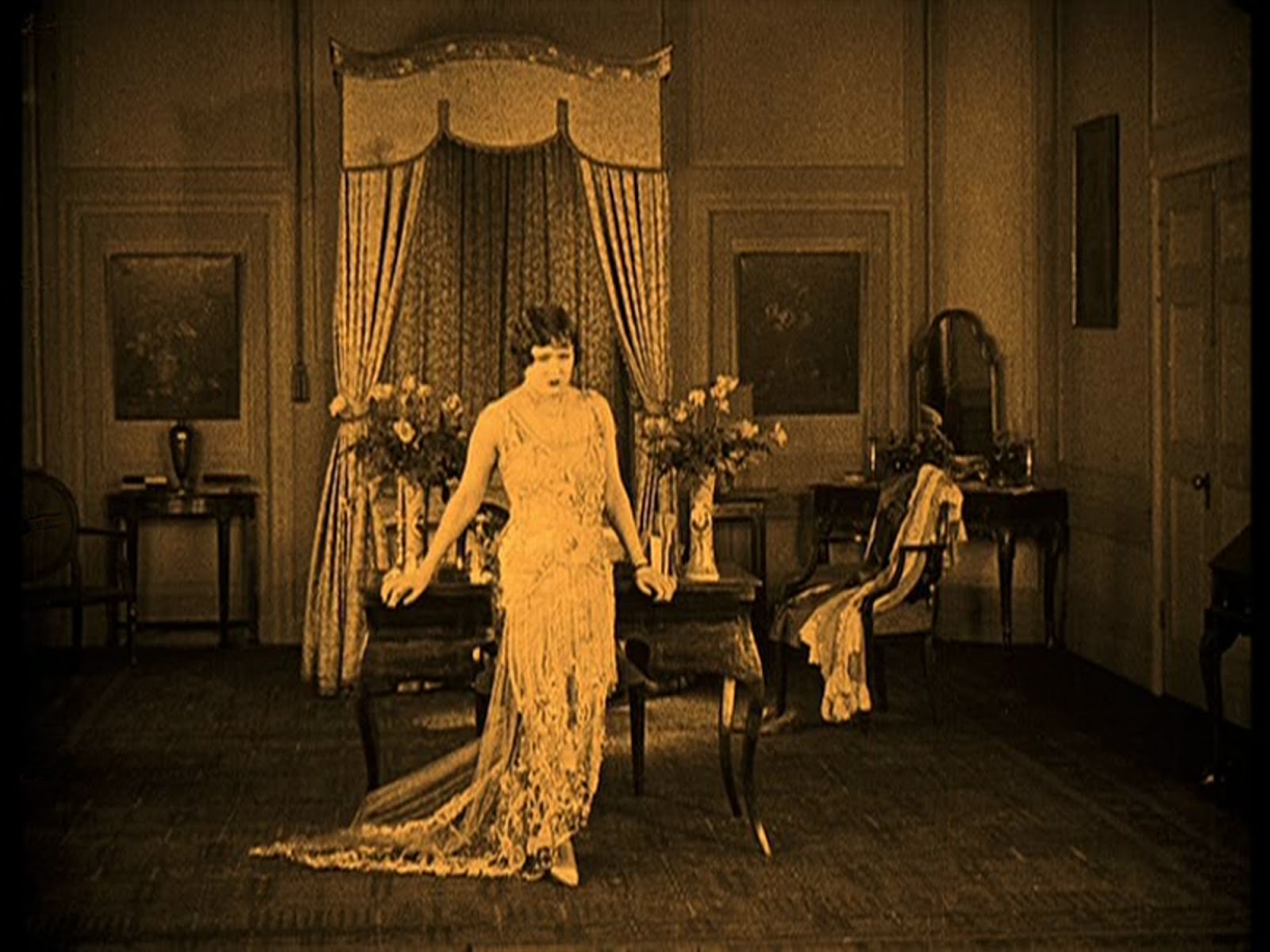
Beyond The Rocks is clearly a good example of what she meant. She wore over a million dollars worth of jewelry and very elaborate costumes.

Even as it was made, censorship forced the director to shoot two versions of the love scenes. One for the USA, in which kisses were not supposed to last more than 3 yards of film, and another for the foreign market with no limitation.

In 2000, Joop van Liempd, a Dutch collector of old films died, leaving behind 2000 cans of films, mostly unlabeled. It took another three years for all seven reels of Beyond The Rocks to be discovered among them.

It would seem that seven minutes are still missing, probably owing to poor storage conditions. In fact some scenes show very heavy signs of film decay. But van Liempd's print is obviously the European, uncensored version.

What about the film itself? Sam Wood offers a competent, if rather unimaginative, direction of a phoned-in love triangle story by Elinor Glyn. And yet, the film is still captivating, thanks to the efforts the two stars.

If you wish to make your own opinion, the film is available on DVD .


Please click "like" on the Facebook page.
That's all for today folks!